

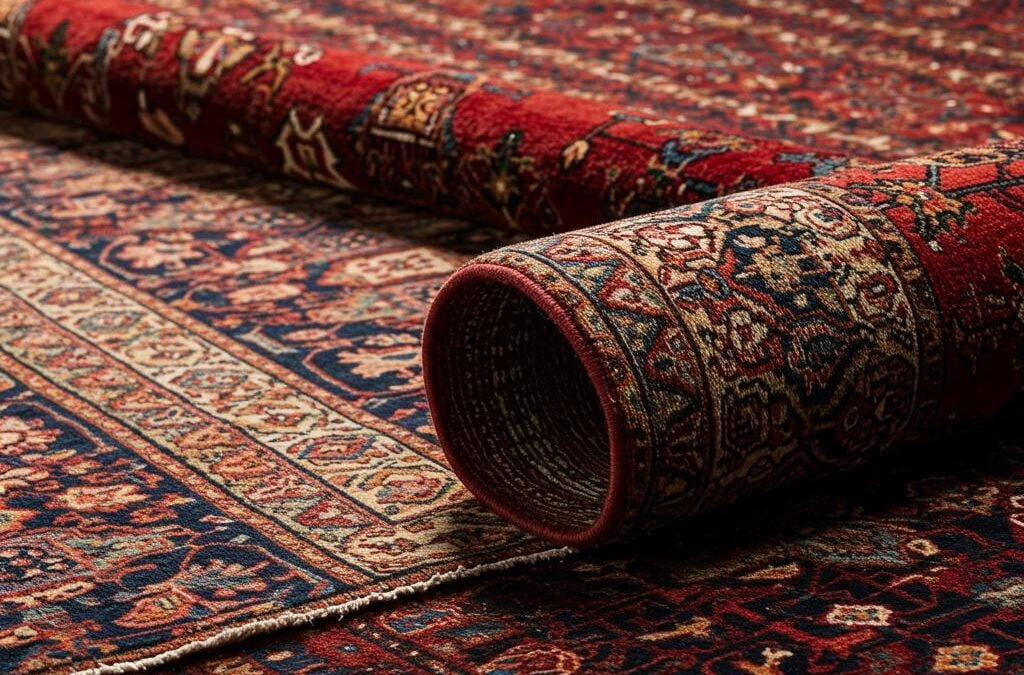
Area rug cleaning in Lake Forest, IL, is a specialized decontamination and restoration process designed to extract abrasive dry particulate soil, atmospheric pollutants, and organic allergens from high-value textile floor coverings. The primary objective is the preservation of structural integrity in rug fibers—such as wool, silk, and cotton—while restoring aesthetic vibrancy and dye stability. Professional cleaning at 100 S. Saunders Road, Suite 150, Lake Forest, IL 60045, utilizes a multi-stage sequence including mechanical dusting, submersion or low-moisture washing, and controlled thermodynamic drying.
The local environment of the North Shore introduces specific challenges, including high indoor humidity from Lake Michigan (averaging 72% annually) and fine clay dust common in Lake County soil. Effective area rug maintenance requires neutralizing these elements through precise chemistry and technical expertise. By employing a Master Rug Cleaner, homeowners ensure that delicate acid dyes are stabilized and that the “fringe-to-fringe” cleaning process addresses both the face fibers and the internal foundation of the rug, preventing the long-term fiber degradation caused by silty clay till.
The George Smile Legacy in the North Shore
The history of textile care in the North Shore is inextricably linked to the expertise of George Smile, the principal of Wiz Team, Inc. Since 1997, George Smile has transitioned European-honed craft into a center of excellence for Lake Forest residents. Operating from the headquarters at 100 S. Saunders Road, Suite 150, George Smile has built a reputation for handling the rarest Persian, Oriental, and contemporary rugs found in the estates of the Lake Forest Historic District and the surrounding Kelmscott Park.
As an IICRC Master Textile Cleaner and a certified Master Rug Cleaner, George Smile possesses the highest technical credentials in the industry. This level of certification is rare, requiring decades of field experience and rigorous examinations in fiber science, dye theory, and restorative chemistry. For homes near Market Square or Lake Forest College, the presence of Wiz Team, Inc. ensures that luxury investments are handled by a local authority who understands the unique architectural and environmental demands of Lake Forest living. The “Wiz Method” is not merely a cleaning service; it is a custodial heritage passed down through specialized training and a commitment to the 60045 community.
Soil Physics and Lake County Geology
The physics of area rug cleaning revolves around the suspension and removal of “occluded” soils—dirt trapped within the microscopic scales of natural fibers. In Lake Forest, the soil composition is heavily influenced by glacial deposits, resulting in a silty clay till that is highly abrasive.
The Impact of Silty Clay Till on Fiber Longevity
When these fine clay particles enter a home, they act as “micro-knives,” severing rug fibers under the pressure of foot traffic. At an altitude of 663 feet, Lake Forest experiences specific wind patterns that carry these particulates into residential air filtration systems.
-
Mechanical Abrasion: Under a microscope, wool fibers have overlapping scales (cuticles). Clay particles lodge between these scales. Every step taken on a soiled rug grinds these particles against the fiber, leading to “traffic lane graying”—a permanent physical damage that no cleaning can reverse once it occurs.
-
Hygroscopic Stress: Lake Michigan’s proximity creates a microclimate where indoor humidity fluctuates significantly. Natural fibers like wool are hygroscopic, meaning they absorb moisture from the air. When moisture meets clay-rich soil trapped in the rug foundation, it creates a “wicking” effect, bringing deep-seated stains to the surface.
The Chemistry of pH and Molecular Suspension
Natural wool fibers are protein-based and possess a natural acidity. Using high-alkaline cleaners (pH > 10) can cause “bleeding” of acid dyes or permanent fiber browning (cellulosic browning). Professional restoration at 100 S. Saunders Road utilizes buffered solutions to maintain a safe pH level between 4.5 and 8.5.
-
Anionic vs. Cationic Bonds: Synthetic pollutants often carry a negative (anionic) charge, while certain fibers like nylon carry a positive (cationic) charge. The “Wiz Method” utilizes specialized surfactants to break these electrostatic bonds, allowing the soil to be fully suspended in the cleaning solution.
-
Thermodynamic Extraction: Molecular activity increases with temperature. By applying controlled heat during the extraction phase, the surface tension of oily binders—the “glue” that holds dirt to the fiber—is reduced.
The Atomic Restoration Sequence
The restoration of a luxury area rug at Wiz Team, Inc. follows a strict, 12-step technical protocol. Each step is designed to address a specific layer of the rug’s anatomy, from the primary pile to the warp and weft of the foundation.
-
Pre-Wash Inspection & Dye Testing: The technician identifies fiber type (Protein, Cellulose, or Synthetic) and performs a stability test on all colors. This prevents “crocking” or dye migration.
-
Mechanical Dry Soil Recovery (Dusting): This is the most critical phase. Utilizing a “Rug Badger” or similar harmonic vibration equipment, the rug is placed face-down. The equipment generates 40,000+ vibrations per minute, shaking loose the 75% of soil that is non-soluble.
-
Vacuuming: High-HEPA filtration vacuums remove the loosened debris from both the front and back of the textile.
-
Pre-Conditioning: A pH-neutral emulsifier is applied to the face fibers. This solution dwells for 15 minutes, allowing “micelles” to encapsulate oil and grease.
-
Agitation: Soft-bristle counter-rotating brushes (CRB) work the chemistry into the nap without distorting the fiber twist.
-
Submersion Wash or Steam Extraction: Depending on the rug’s construction, it is either washed in a specialized rug pit or cleaned via high-heat extraction at 212°F at the 100 S. Saunders Road facility.
-
Decontamination/Odour Neutralization: For rugs with pet urine, an oxidative treatment or enzyme soak is used to break down uric acid crystals.
-
Rinsing: A specialized acid-side rinse is applied to neutralize any remaining alkalinity, leaving the fibers soft and “crunch-free.”
-
Fringe Detailing: Hand-cleaning of the cotton or silk fringe ensures the tassels are restored to their original white or cream color without the use of damaging bleach.
-
Centrifugal Water Removal: The rug is placed in a centrifuge that spins at 1,200 RPM, removing 95% of the water in 3 minutes.
-
Controlled Drying: The rug is hung in a climate-controlled room with high-velocity air movers and industrial dehumidifiers.
-
Final Grooming & Inspection: The pile is brushed in the direction of the “lay,” and George Smile performs a final quality audit.
Serving the North Shore Communities
The influence of Wiz Team, Inc. extends across Lake County, providing high-performance textile care to neighboring towns with specific geographic needs.
Lake Bluff Rug Cleaning & Restoration
Lake Bluff residences, particularly those near the Village Green, require frequent rug maintenance due to the high influx of organic matter from the heavily wooded landscape and the Lake Bluff Yacht Club area.
-
Technical Challenge: Tree pollen and leaf tannins often track into these homes, creating “tannin stains” that require specialized acidic spotting agents.
-
Driving Directions: From the office at 100 S. Saunders Road, Suite 150, travel North on Saunders Road toward IL-60 (Townline Rd). Turn Right (East) onto IL-60 and continue past the I-94 interchange. Turn Left (North) onto Waukegan Road (IL-43), then Right onto IL-176 (Scranton Ave) to enter the heart of Lake Bluff.
Libertyville High-Performance Textile Care
Homes in Libertyville, especially those bordering the Des Plaines River, face higher indoor humidity levels which can exacerbate “musty” odors and microbial growth in wool rugs.
-
Technical Challenge: River-proximate homes often deal with higher atmospheric moisture, making professional “Flash Drying” essential to prevent mold.
-
Driving Directions: Depart 100 S. Saunders Road and head South toward West Deerpath Road. Turn Right (West) onto West Deerpath Road, which becomes IL-60 (Townline Rd). Continue West past the Westfield Vernon Hills area. Turn Right (North) onto Milwaukee Avenue (IL-21) to reach downtown Libertyville.
Deerfield Precision Fiber Cleaning
The residential corridors of Deerfield benefit from the proximity-based service of the Lake Forest headquarters, ensuring rapid turnaround for rug pickup and delivery.
-
Technical Challenge: Frequent commuting via the Deerfield Metra Station results in high levels of industrial “rail dust” (iron filings) entering the home.
-
Driving Directions: From the headquarters, travel South on Saunders Road. Turn Left (East) onto Deerfield Road. Continue East past the Deerfield Metra Station and the intersection of Waukegan Road to access the primary residential districts of Deerfield.
Wool vs. Silk vs. Synthetics
Understanding the “Atomic” makeup of your rug is essential for proper maintenance. At 100 S. Saunders Road, Suite 150, George Smile categorizes rugs into three distinct scientific tiers:
1. Protein Fibers (Wool and Silk) Wool is the “Gold Standard” of rug fibers. It contains Lanolin, a natural oil that repels liquids. However, wool is highly sensitive to heat and high-pH chemicals. Silk, derived from the cocoons of the mulberry silkworm, is composed of Fibroin. Silk is extremely delicate and can lose up to 20% of its strength when wet, requiring “Low Moisture” restoration techniques.
2. Cellulosic Fibers (Cotton, Jute, Sisal) Found often in the “foundation” (warp and weft) of a rug, cotton provides structural stability. Jute and Sisal are stiffer but are highly prone to “browning” if they remain wet for too long. These fibers require rapid evaporation during the drying phase.
3. Synthetic Fibers (Nylon, Polyester, Triexta) Common in “Power Loomed” or modern rugs, synthetics are petroleum-based. While they are stain-resistant, they have a “low melting point” and are prone to “oil attraction.” Polyester rugs, in particular, love oil and require heavy-duty emulsifiers to de-grease.
Snippet-Bait for Lake Forest Residents
1. How often should I clean my Persian rug in Lake Forest? Professionals recommend a deep cleaning every 12 to 18 months. Homes near Lake Michigan or the Skokie Lagoons may require more frequent cleaning due to higher humidity and particulate levels.
2. Is “Steam Cleaning” safe for luxury rugs? “Steam” is a misnomer; the process is actually Hot Water Extraction. While safe for many synthetics, hand-knotted wool rugs should never be “steamed” at home. They require the controlled, temperature-monitored environment of a specialized rug plant like Wiz Team, Inc.
3. Can you remove pet urine odors from an Oriental rug? Yes. Uric acid is a salt that stays in the fiber for years. We use a submersion soak that dissolves the salt crystals, followed by an antimicrobial flush.
4. Why is my rug “shedding” after I vacuum? Shedding is often a sign of dry rot or “fiber fatigue” caused by trapped clay particles. Regular professional dusting at 100 S. Saunders Road prevents this.
5. How do I identify a “handmade” rug? Look at the back. If the pattern is as clear as the front and the “knots” are slightly uneven, it is likely handmade. Machine-made rugs will have a perfectly uniform “mesh” backing.
6. Does George Smile offer “In-Plant” or “On-Site” cleaning? For area rugs, In-Plant cleaning is the only way to achieve 100% soil removal. On-site cleaning is essentially a “surface wash” and cannot remove deep foundation grit.
7. Can rug cleaning remove “moth damage”? Cleaning removes the larvae and eggs, stopping the damage. However, the physical holes left by moths require Master Weaver repairs, which George Smile also facilitates.
8. What is the “Master Rug Cleaner” certification? It is a multi-year program requiring the study of over 50 different rug-producing regions, dye types, and repair techniques. George Smile is one of the few in Illinois to hold this title.
9. Are your cleaning agents safe for infants? Yes. Our solutions are Procyon-based or soap-free, leaving zero residue and ensuring a non-toxic environment for homes in the 60045 area.
10. How do I transport my rug to 100 S. Saunders Road? We offer white-glove pickup and delivery. Our team will move furniture, roll the rug, and re-install it with precision padding.
Semantic Closing Statement
Wiz Team, Inc. remains the premier entity for area rug cleaning in the North Shore, anchored at 100 S. Saunders Road, Suite 150, Lake Forest, IL 60045. Under the leadership of Master Rug Cleaner George Smile, the firm integrates advanced soil physics with decades of local heritage to preserve the finest textiles in Illinois. From the historic homes of Lake Forest to the modern estates of Libertyville, our “Atomic Authority” process ensures that every fiber is decontaminated, every dye is protected, and every rug is restored to its original splendor.