


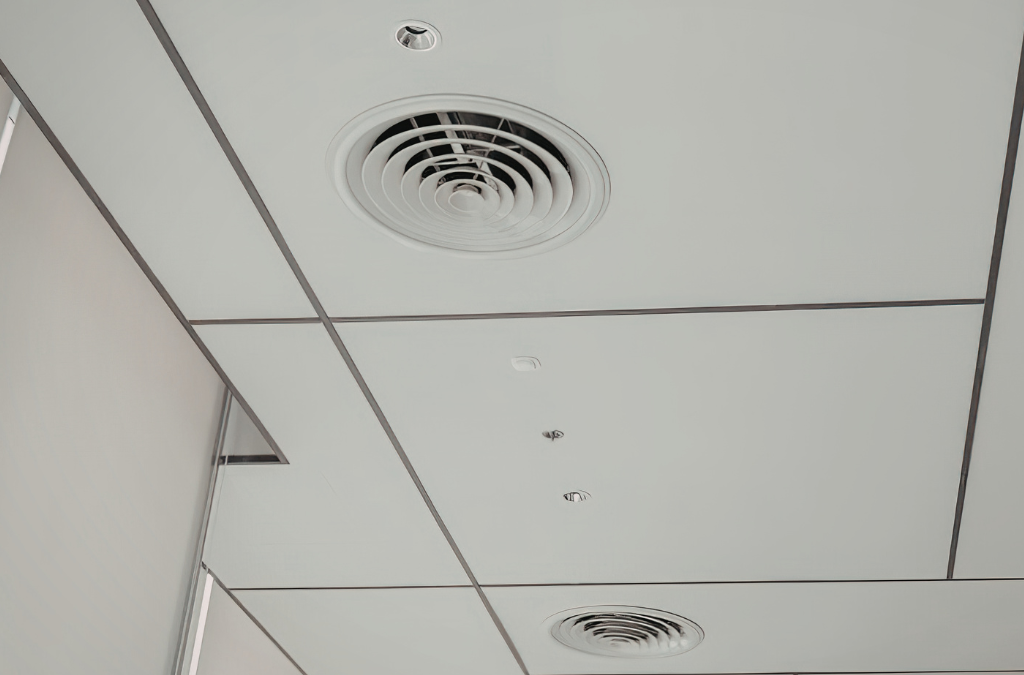
Your home’s HVAC system does more than heat and cool individual rooms. It continuously moves air through supply and return ducts, registers, and other components throughout the building. Over time, dust and other debris can accumulate within these areas, particularly when filters are overdue for replacement, construction has taken place, or a system has experienced unusual contamination.
For homeowners researching air duct cleaning in Lake Forest, the important question is not simply whether ducts look dusty. It is whether the HVAC system needs professional cleaning and, if so, what parts of the system should be addressed.
Air duct cleaning is different from simply wiping down vent covers. A professional evaluation considers the accessible ductwork, registers, return areas, and other HVAC components that may contain accumulated debris. The appropriate cleaning process also depends on the system’s design and condition.
Wiz Team, Inc. provides air duct cleaning from its Lake Forest location at 100 S. Saunders Road, Suite 150. The company is NADCA certified and offers duct, vent, and dryer vent cleaning services in Lake Forest, Lake Zurich, and surrounding Chicagoland communities.
What Is Air Duct Cleaning?
Air duct cleaning is the process of removing accumulated dust and debris from accessible components of an HVAC air distribution system.
A typical residential HVAC system can include:
- Supply ducts
- Return ducts
- Supply registers
- Return grilles
- Main trunk lines
- Branch ducts
- Blower and air-handling components
- Other accessible system components
Not every system has the same configuration. Older homes, additions, remodeled properties, and larger residences can have more complicated duct layouts.
Professional cleaning should therefore begin with an inspection rather than assuming that every system requires the same procedure.
Why Do HVAC Ducts Collect Dust?
Air ducts naturally move air, and the air moving through a home contains some amount of particulate matter.
Dust can come from:
- Household activities
- Outdoor soil
- Pollen
- Pet hair and dander
- Clothing and fabrics
- Construction or remodeling work
- General household debris
A properly maintained HVAC filter captures a portion of airborne particles before they enter or circulate through the system. However, filters have limitations, and they require regular replacement or cleaning according to the manufacturer’s instructions.
When filters are neglected, damaged, improperly installed, or unsuitable for the system, more particles may pass through the HVAC equipment.
Dust can also accumulate in return areas, registers, and accessible portions of ductwork over time.
Does Every Home Need Air Duct Cleaning?
Not necessarily.
A common mistake is assuming that every homeowner should have their ducts professionally cleaned on an identical schedule.
The condition of the system matters more than an arbitrary calendar date.
Professional evaluation may make sense when:
- There is visible debris inside accessible ductwork
- Dust or construction material entered the HVAC system during remodeling
- The property has recently undergone major construction
- There has been water intrusion affecting ductwork
- There is evidence of pests inside the HVAC system
- A previous inspection identified substantial contamination
- The HVAC system has not been professionally evaluated for many years
- Dust or debris has accumulated around registers and return openings
Wiz Team’s air duct cleaning page recommends professional inspection to determine the contamination level of a duct system and states that its technicians provide cleaning of ducts, vents, and dryer vents.
What Does Lake Forest’s Climate Have to Do With HVAC Maintenance?
Lake Forest experiences four distinct seasons, which means homes transition between heating and cooling throughout the year.
Spring
Spring can introduce increased amounts of pollen and outdoor debris into homes. Open windows and frequent entry and exit through exterior doors can increase the amount of outdoor material brought indoors.
Good filtration and regular housekeeping are important during periods when outdoor particles are more prevalent.
Summer
During warmer months, air conditioning systems operate more frequently. Moisture management becomes important because HVAC systems remove moisture from indoor air as part of normal cooling operation.
If there is an actual moisture problem, condensation issue, water intrusion, or visible microbial growth, the underlying cause should be addressed rather than simply cleaning the ductwork.
Fall
Fall brings leaves, soil, and other outdoor debris. Entry mats and removing outdoor shoes can reduce the amount of material introduced into the home.
Winter
Heating systems may operate for extended periods during cold weather. A clean filter and properly maintained HVAC equipment are important during periods of heavy furnace use.
Changing the filter according to the manufacturer’s recommendations is one of the simplest ways homeowners can support routine HVAC maintenance.
Signs That Your Ductwork May Need Professional Attention
Duct cleaning is not something homeowners can always evaluate by looking at a single vent cover.
Several situations may justify a professional inspection.
Visible Debris
If you can see substantial dust, construction material, or other debris inside an accessible duct or register, professional evaluation may be appropriate.
A small amount of ordinary dust around a register does not necessarily mean that the entire HVAC system requires cleaning.
Recent Remodeling
Construction can generate significant amounts of drywall dust, sawdust, insulation particles, and other debris.
If HVAC registers were not adequately protected during remodeling, construction material may have entered the duct system.
Water Damage
Moisture problems require more than routine cleaning.
If ductwork has been affected by water intrusion, condensation, flooding, or another moisture event, the source of the moisture should be identified and corrected.
Cleaning alone does not solve an ongoing water problem.
Pest Contamination
Evidence of rodents, insects, nesting material, or other pest activity inside ductwork requires appropriate assessment.
The pest issue should be resolved before relying on duct cleaning as the solution.
Persistent Odors
Unusual odors coming from registers can have several causes. Possible sources include contaminated filters, moisture problems, biological material, combustion issues, or odors originating elsewhere in the building.
The source should be identified before deciding that duct cleaning is the appropriate remedy.
What Happens During Professional Air Duct Cleaning?
A quality cleaning process should be based on the HVAC system being serviced.
1. System Inspection
The technician first evaluates the system and identifies accessible components, contamination, and potential problem areas.
This step helps determine the appropriate cleaning approach.
2. Protecting the Work Area
HVAC cleaning can disturb dust if it is not properly contained.
Professional procedures should take reasonable steps to protect surrounding furnishings and prevent unnecessary debris from spreading into occupied areas.
3. Creating Controlled Airflow
Negative pressure is commonly used as part of professional duct-cleaning procedures.
In simple terms, negative pressure means the cleaning system creates suction so that loosened debris is drawn toward the collection equipment rather than freely escaping into the room.
4. Agitating Accumulated Debris
Some debris adheres to duct surfaces and requires mechanical agitation.
Depending on the system, technicians may use brushes, air tools, or other specialized equipment to loosen material.
The equipment should be appropriate for the duct material and system configuration.
5. Vacuum Extraction
Once debris has been loosened, vacuum equipment removes it from the system.
Wiz Team states that its air duct cleaning process uses specialized equipment to clean ductwork, vents, and related HVAC areas. The company also identifies itself as NADCA certified.
6. Cleaning Registers and Grilles
Supply registers and return grilles can accumulate visible dust and debris.
Cleaning these accessible components is an important part of addressing the areas homeowners see every day.
7. Final Review
After cleaning, the technician can review the accessible system components and discuss any conditions that may require additional attention.
A professional should also explain any limitations, particularly when certain portions of a duct system cannot be accessed without specialized construction work.
What Is Negative Pressure?
Negative pressure is a term frequently used in professional duct cleaning.
The basic concept is straightforward: a powerful vacuum creates a pressure differential that pulls air and loosened debris toward the collection equipment.
This helps control where contaminants travel during cleaning.
Negative pressure is not a cleaning chemical or a type of duct material. It is an airflow-control method used during the cleaning process.
What Is HEPA Filtration?
HEPA stands for High-Efficiency Particulate Air.
HEPA filtration refers to a filtration standard designed to capture very small airborne particles at a high efficiency under specified testing conditions.
The term should not automatically be interpreted as meaning that every HEPA-filtered vacuum removes every contaminant from an HVAC system.
The overall cleaning result depends on the equipment, containment, access, technician procedures, and condition of the system.
What Is a Trunk Line?
A trunk line is one of the larger primary ducts in an HVAC distribution system.
It typically connects the main air-handling equipment to smaller branch ducts that distribute air to individual rooms.
A useful way to picture it is as a tree:
Main HVAC equipment → trunk duct → branch ducts → registers
The exact arrangement varies between homes.
Why Does the Cleaning Method Matter?
HVAC ductwork is not always made from the same materials.
Some systems contain sheet-metal ducts, while others may incorporate flexible ductwork, fiberglass components, insulated materials, or combinations of different construction types.
Using excessive force or inappropriate tools can damage certain duct materials.
This is why professional technicians should evaluate the system before selecting cleaning equipment and procedures.
Air Duct Cleaning vs. Changing the HVAC Filter
These are two different maintenance tasks.
Changing the Filter
The filter’s primary purpose is to capture airborne particles before they continue through the HVAC system.
Homeowners should follow the filter manufacturer’s replacement instructions and the HVAC equipment manufacturer’s recommendations.
Cleaning the Ductwork
Duct cleaning addresses accumulated material within accessible portions of the air distribution system.
One does not replace the other.
Even after professional duct cleaning, homeowners still need to maintain the HVAC filter and follow normal equipment maintenance recommendations.
Can Air Duct Cleaning Improve Energy Efficiency?
This claim needs some context.
A dirty HVAC system can contain accumulated debris, but it would be inaccurate to promise that duct cleaning will automatically reduce every homeowner’s energy bill.
HVAC efficiency depends on many factors, including:
- Equipment condition
- Filter condition
- Duct design
- Airflow
- Insulation
- Thermostat settings
- Building envelope
- Refrigerant or heating-system condition
- Maintenance history
If substantial debris is restricting airflow in a component, cleaning may help restore that component to a cleaner condition. However, homeowners should not expect duct cleaning alone to solve broader HVAC efficiency problems.
For energy concerns, a qualified HVAC professional can evaluate the entire system.
Does Air Duct Cleaning Improve Indoor Air Quality?
Air duct cleaning can remove accumulated dust and debris from the portions of an HVAC system that are cleaned.
However, indoor air quality is influenced by much more than ductwork.
Other factors include:
- Outdoor air entering the building
- Cooking
- Cleaning products
- Furnishings
- Humidity
- Combustion appliances
- Pet activity
- Building materials
- HVAC filtration
- Ventilation
Therefore, duct cleaning should be viewed as one component of an overall indoor air quality strategy, not a complete solution for every indoor air concern.
Should Antimicrobial Treatments Be Used?
Not automatically.
Antimicrobial products are sometimes discussed in connection with HVAC cleaning, but homeowners should understand why a product is being recommended before allowing it to be applied.
If there is suspected mold or microbial growth, the underlying moisture problem needs to be addressed first.
A professional should also explain:
- What condition the treatment is intended to address
- What product will be used
- Where it will be applied
- Whether the product is appropriate for the specific HVAC components
- Any required safety precautions
Cleaning and chemical treatment are not interchangeable.
How Often Should Air Ducts Be Cleaned?
There is no universal schedule that applies to every home.
Instead, consider the system’s condition and history.
A professional inspection may be appropriate when there is:
- Significant visible contamination
- Remodeling debris
- Water damage
- Pest contamination
- Persistent unexplained odors
- A long history without professional inspection
- Other evidence that the HVAC system needs attention
Routine HVAC filter replacement and equipment maintenance should continue regardless of whether duct cleaning has recently been performed.
What Homeowners Can Do Between Professional Cleanings
Professional cleaning is only one part of HVAC maintenance.
Replace Filters Regularly
Follow the manufacturer’s recommendations for filter replacement.
A clogged or neglected filter can restrict airflow and reduce the system’s ability to capture airborne particles.
Keep Registers Accessible
Avoid blocking supply and return registers with furniture, rugs, curtains, or storage items.
Adequate airflow is important for proper HVAC operation.
Keep Vents Clean
Dust visible register surfaces periodically using appropriate household cleaning methods.
If you notice substantial debris inside the duct opening, avoid pushing it deeper into the system.
Address Moisture Problems Promptly
Water leaks, condensation problems, and other moisture issues should be investigated promptly.
Cleaning the ductwork without correcting an active moisture source may allow the problem to return.
Schedule Routine HVAC Maintenance
Air duct cleaning is not a replacement for professional HVAC equipment maintenance.
Heating and cooling equipment should be serviced according to the manufacturer’s recommendations and the needs of the system.
Choosing an Air Duct Cleaning Company in Lake Forest
When comparing providers, ask specific questions rather than focusing only on the advertised price.
A reputable company should be able to explain:
- What parts of the HVAC system will be cleaned
- How the system will be inspected
- What equipment will be used
- How debris will be contained
- Whether the cleaning method changes based on duct construction
- Whether additional treatments are recommended and why
- What areas are inaccessible
- What results can reasonably be expected
Be cautious of companies that make sweeping promises about eliminating all allergens, curing health conditions, or dramatically reducing energy bills.
Professional cleaning should be based on the actual condition of the HVAC system.
Why NADCA Certification Matters
Wiz Team, Inc. states that it is NADCA certified. NADCA is the National Air Duct Cleaners Association, an industry organization focused on HVAC system cleaning and related standards.
Certification is one factor homeowners can consider when evaluating a duct-cleaning company. It does not mean every cleaning job will produce identical results, but it provides an additional indication that the company participates in an industry-specific certification program.
Wiz Team also states that its team holds multiple cleaning and restoration certifications and identifies IICRC designations among its professional credentials.
Wiz Team, Inc. in Lake Forest
Wiz Team, Inc. is a family-owned cleaning and restoration company led by founder George Smile. According to the company’s published history, Smile began the business in Munich and later re-established Wiz Team, Inc. in the United States in 1998.
The company’s Lake Forest office is located at:
Wiz Team, Inc.
100 S. Saunders Road, Suite 150
Lake Forest, IL 60045
The company lists air duct cleaning among its residential and commercial cleaning services and serves Lake Forest, Lake Zurich, and surrounding Chicagoland communities.
Wiz Team’s published service-area information includes communities such as Libertyville, Deerfield, Wilmette, Highland Park, Gurnee, Northbrook, Glenview, Mundelein, Vernon Hills, Winnetka, Glencoe, Lincolnshire, Lake Bluff, Grayslake, Riverwoods, Wadsworth, Kenilworth, Bannockburn, Mettawa, and others.
Frequently Asked Questions
How do I know if my air ducts need cleaning?
Look for conditions such as substantial visible debris, remodeling contamination, water damage, pest activity, persistent unexplained odors, or a long period without professional inspection. A professional assessment can help determine whether cleaning is appropriate.
Does air duct cleaning remove all dust from a home?
No. Dust enters a home continuously through people, pets, outdoor air, fabrics, and normal household activity. Duct cleaning addresses accumulated material within the HVAC system, not every source of dust in the building.
Will duct cleaning eliminate allergies?
It should not be presented as a treatment or cure for allergies. Indoor air quality has many contributing factors, and people with health concerns should consult an appropriate medical professional.
Is duct cleaning the same as cleaning the vents?
No. Cleaning visible registers is only one part of HVAC maintenance. Professional duct cleaning can address accessible portions of the supply and return duct system and other components, depending on the service scope.
Can I clean my own air ducts?
Homeowners can safely perform basic maintenance such as cleaning accessible vent covers and replacing HVAC filters according to manufacturer instructions. Deep duct cleaning requires specialized equipment and knowledge, particularly when the system contains difficult-to-access or delicate components.
Should ducts be cleaned after remodeling?
It may be appropriate if construction dust or debris entered the HVAC system. An inspection can determine whether professional cleaning is necessary.
Does a dirty air filter mean my ducts need cleaning?
Not necessarily. A dirty filter indicates that the filter needs attention, but it does not automatically mean the ductwork is contaminated. The two issues should be evaluated separately.
Does air duct cleaning make the HVAC system more efficient?
It can help when significant debris is affecting airflow or contaminating system components, but overall HVAC efficiency depends on many factors. Duct cleaning should not be treated as a guaranteed energy-saving measure.
Final Takeaway
Air duct cleaning is most useful when it addresses an actual HVAC maintenance need rather than being treated as a routine cure-all.
For Lake Forest homeowners, the best starting point is to inspect the system, identify the source and extent of contamination, and determine whether professional cleaning is appropriate. Regular filter replacement, proper HVAC maintenance, moisture control, and good housekeeping should continue regardless of whether the ducts have recently been cleaned.
When professional cleaning is necessary, the process should include appropriate inspection, containment, debris removal, and attention to the specific construction of the HVAC system.
Wiz Team, Inc. offers air duct cleaning in Lake Forest from its local office on S. Saunders Road and identifies NADCA certification among its professional credentials. Its services cover Lake Forest and surrounding North Shore and Chicagoland communities.